Tracing Deposit Flows That Trigger Tiered Spin Allocations During Live Dealer Sessions on Mobile Platforms
Olivia Friedrich · May 30, 2026

Tracing Deposit Flows That Trigger Tiered Spin Allocations During Live Dealer Sessions on Mobile Platforms
Deposit flows in mobile casino environments operate through integrated payment processors that connect directly to player accounts and trigger automated responses in live dealer sessions. These flows begin when a user initiates a transaction via bank transfer, e-wallet, or card method, and the system verifies the amount before routing it to the game server. Once cleared, the deposit activates allocation rules that assign spins based on predefined tiers, such as bronze, silver, or gold levels determined by account history and total funded amounts. Observers note that this process occurs in real time during live dealer interactions, where players remain engaged at virtual tables while the backend tracks every incoming fund.
Mechanics of Deposit Processing on Mobile Devices
Systems on portable platforms handle deposits by channeling funds through secure gateways that interface with both the casino operator and third-party processors. The flow starts with user authentication on the app, followed by selection of a payment option and entry of transaction details. Upon successful authorization, the amount registers in the player's balance and simultaneously feeds into algorithms that evaluate eligibility for spin allocations. Research from the University of Nevada's gaming studies indicates that these algorithms cross-reference deposit size against historical data to assign spins without interrupting the live stream. Players continue betting at roulette or blackjack tables while the allocations appear as bonus credits ready for use in subsequent rounds.
Tiered Spin Allocation Rules and Triggers
Tiered allocations depend on cumulative deposit thresholds that platforms update dynamically during active sessions. A deposit exceeding a certain value might elevate a player from one tier to another, unlocking additional spins that apply specifically to live dealer games. Data shows that mobile systems monitor session length and deposit frequency to adjust these tiers in real time, ensuring spins activate only after the funds clear and the player meets interaction criteria. According to reports from the Australian Communications and Media Authority, such mechanisms help maintain compliance with transaction monitoring standards across international operators. The allocation process links directly to the live dealer feed, so spins appear as overlay notifications or integrated game features during the session.
Integration with Live Dealer Environments
Live dealer sessions on mobile platforms combine video streams with backend software that responds to deposit activity. When funds arrive, the system evaluates the player's current tier and assigns spins that can apply to table games without requiring a switch to slot interfaces. This integration keeps users immersed in the dealer interaction while the platform processes the flow and updates the spin balance. Those who study mobile gaming patterns have observed that delays in allocation often stem from verification steps in the payment chain rather than the game software itself. In May 2026, several operators introduced enhanced tracking tools that provide players with transaction logs visible directly within the live session window.
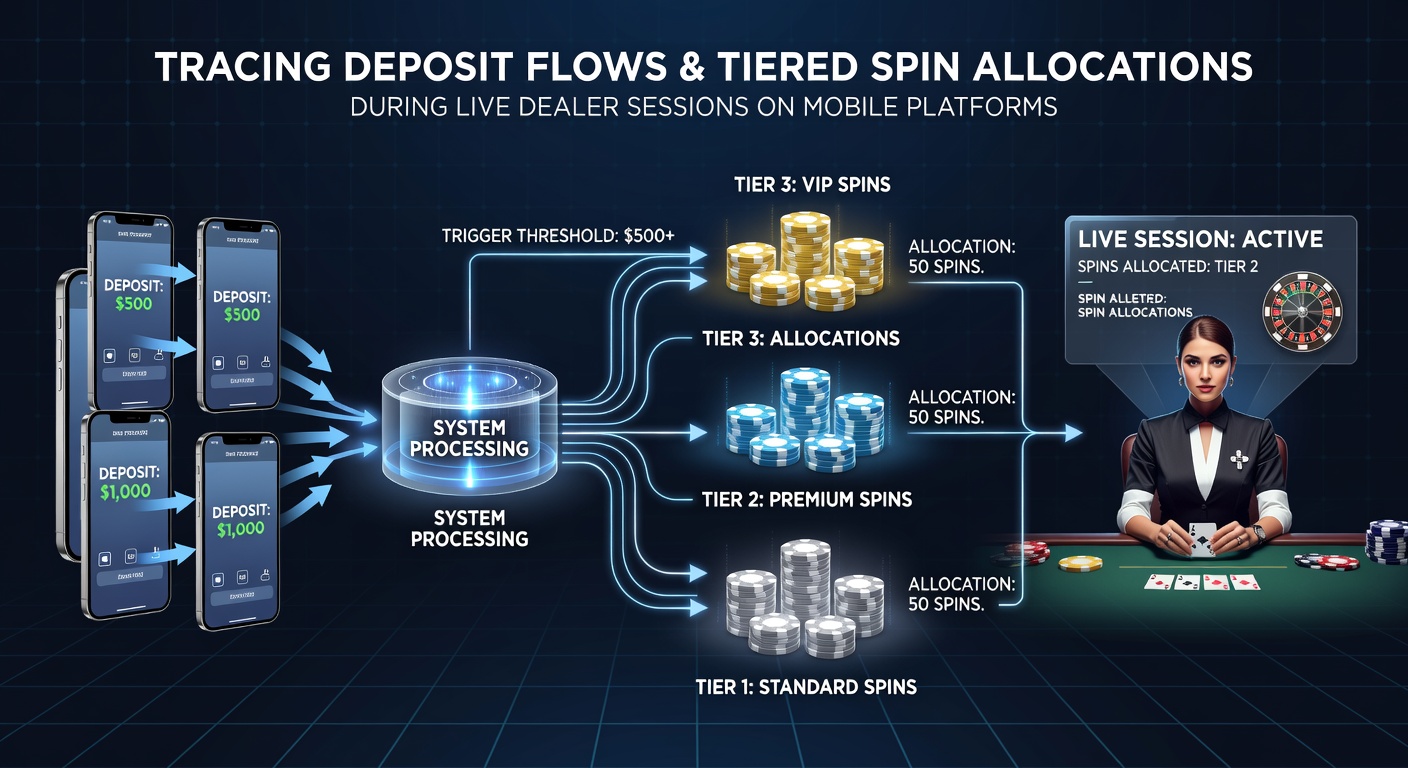
Tracing these flows requires logging each step from the initial payment request through the server response and into the game client. Mobile apps record timestamps for deposits, tier evaluations, and spin grants, creating an audit trail that operators use for both internal review and regulatory reporting. Experts have found that this trail reveals patterns such as rapid successive deposits triggering higher tiers during extended live sessions. The process relies on API connections between payment providers and the casino's management system, which execute the tier checks automatically once the deposit amount posts to the account.
Technical Pathways and Data Tracking
Pathways for deposit data move through encrypted channels that prevent interception while allowing seamless updates to player profiles. On mobile platforms, the app maintains a persistent connection to the server during live dealer play, enabling immediate reflection of new allocations in the user interface. Researchers discovered that tier progression often accelerates when multiple deposits occur within a single session, as the system aggregates amounts before finalizing spin awards. This aggregation happens in the background, leaving the dealer interaction uninterrupted. Platforms also incorporate fraud detection layers that scan deposit flows for anomalies before releasing spins, adding an extra verification layer without visible delays to the player.
Examples from Operational Platforms
One study revealed that platforms handling high volumes of mobile live dealer traffic use centralized databases to map deposit histories against spin eligibility. In cases where players deposit during peak hours, the allocation system prioritizes tier upgrades that unlock spins for the current game type. Observers note that these examples demonstrate how flows adapt to session context, such as assigning spins only after a minimum number of hands have been played. The technical setup ensures that allocations remain tied to verified deposits, maintaining consistency across different device types and network conditions.
Conclusion
Tracing deposit flows that trigger tiered spin allocations reveals a coordinated system linking payment processing, tier evaluation, and live dealer functionality on mobile platforms. The process operates through automated checks that respond to incoming funds while players remain engaged at virtual tables. Data from industry sources continues to highlight the precision of these mechanisms, which support both operational efficiency and regulatory adherence as of May 2026. Further examination of these pathways shows their role in sustaining continuous play across portable environments.